Guides
How to Choose a Canadian Internet Provider: CRTC Rules, Prices, and Real Speeds
Choose internet provider in canada with CRTC wholesale rules in mind. Ask these questions, request this evidence, and know which answers end the call.
What to take away
- Wholesale access rules mean a smaller provider can rent the incumbent's last-mile network, so the same physical line can be sold by several companies at different prices.
- Ask every provider for the technology type (fibre, cable, DSL, fixed wireless), the upload speed, and the contract term before you discuss price.
- Request a written monthly total including equipment rental, installation, and any price change scheduled inside the term.
- An answer that hides upload speed, refuses a written total, or requires a bundle to get the advertised rate should end the conversation.
- Run your own speed test after install and keep the results, because advertised and delivered speeds are different numbers.
The jobs are not the same job
Most Canadian households are choosing between four technical setups, and they are not interchangeable. Fibre to the home carries the highest upload speeds. Cable DOCSIS lines are widely available and usually faster downstream than upstream. DSL runs over phone copper and degrades with distance from the central office. Fixed wireless depends on line of sight to a tower.
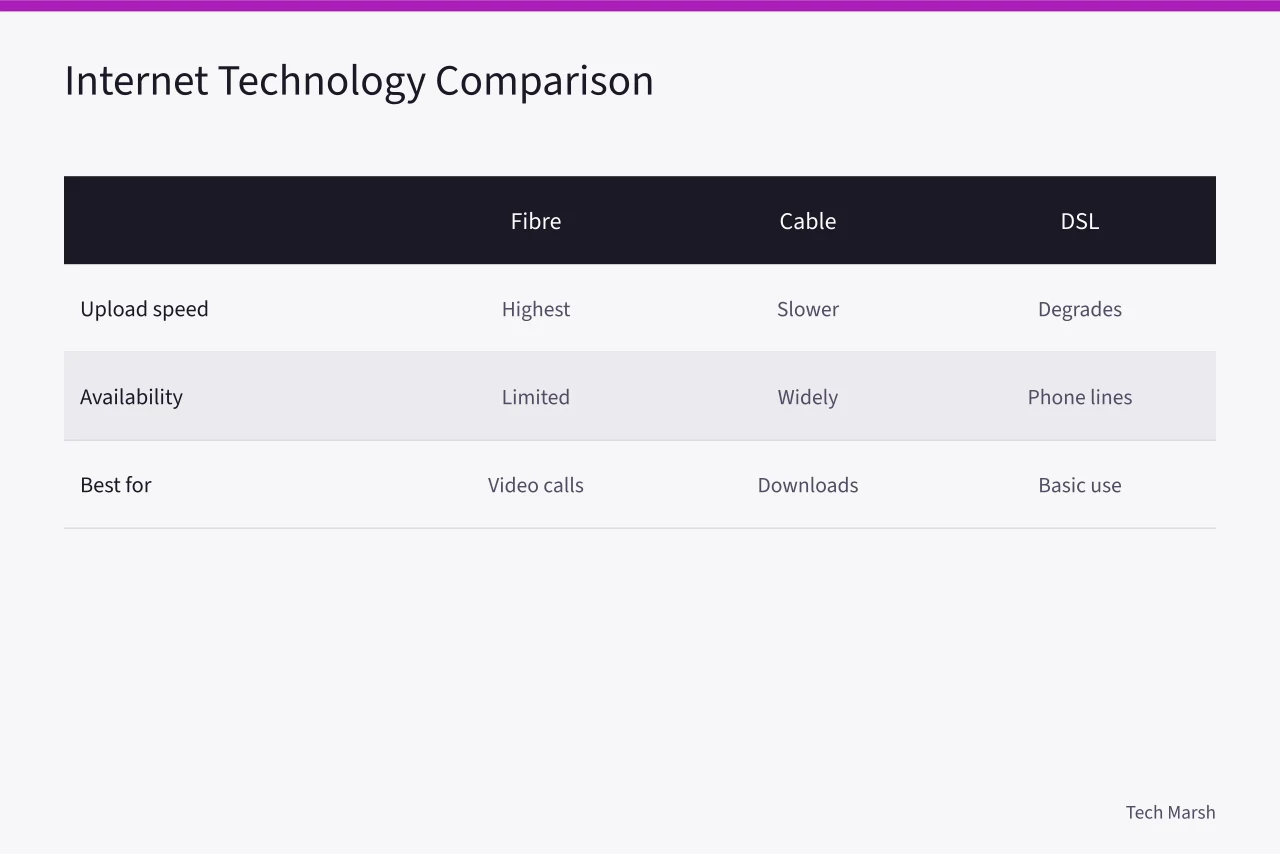
Each fits a different job. A household with two people on video calls all day needs upload capacity. A cottage or rural property may only have fixed wireless or a local co-op. Match the technology to the job before you compare monthly prices, because a cheap DSL plan that cannot hold a call is not a cheaper option.
Questions to ask before you sign
The CRTC regulates wholesale access, which is why regional resellers exist at all. The CRTC overview explains the mandate behind those decisions. Read it before a sales call so you know which parts of the offer are regulated and which are pure marketing.
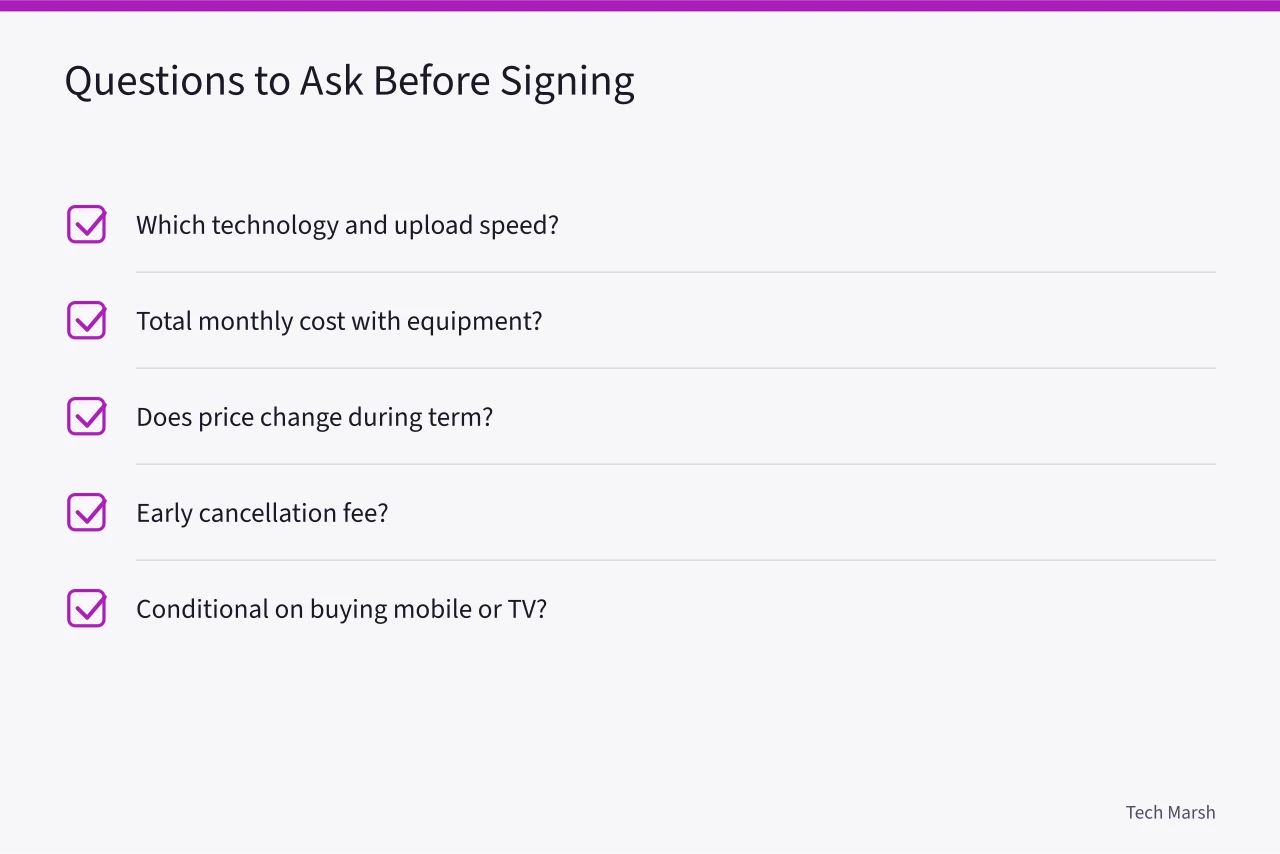
Ask these questions in this order and write the answers down.
- "Which technology delivers this plan, and what is the upload speed in megabits per second?"
- "What is the total monthly cost with the modem or router rental included?"
- "Does the price change during the term, and by how much?"
- "What is the early cancellation fee if I leave in month three?"
- "Is this rate conditional on also buying mobile or television service?"
A reseller riding an incumbent's line is not automatically worse. It is often the same copper or fibre with a different billing system. What changes is support, installation scheduling, and how quickly a fault gets escalated.
Evidence to request in writing
Ask for the agreement and the price schedule as a PDF before the install date. A verbal quote is not evidence.
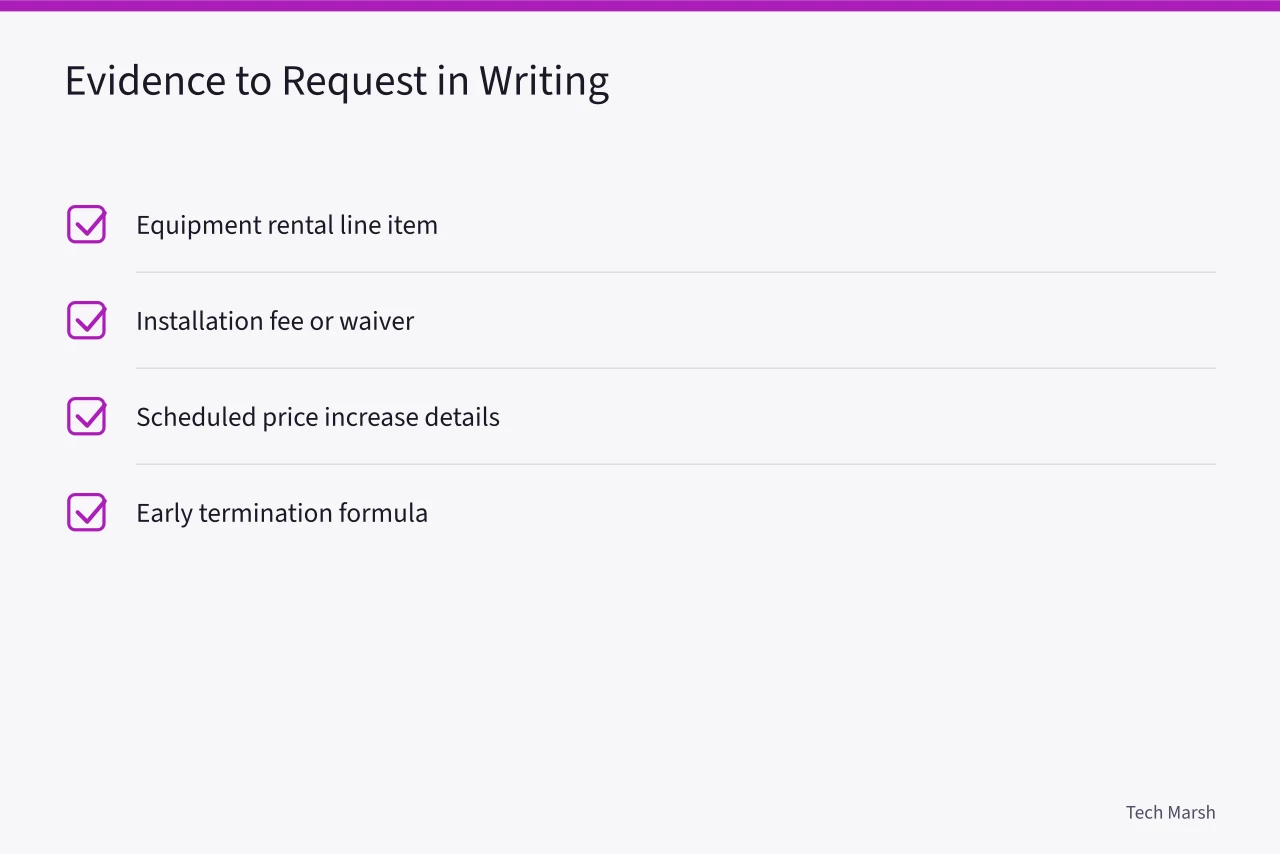
- A line item for equipment rental, separate from the plan price.
- The installation fee, or a written statement that it is waived.
- Any scheduled price increase with its date and new amount.
- The early termination formula, not just a maximum figure.
If a provider will not put the price schedule in writing, treat the offer as unverified. For context on what speeds actually support common tasks, the broadband speed definitions are a useful baseline, and our accessible technology guide covers setup choices that affect how a connection performs in practice.
Answers that should end the conversation
Three responses are disqualifying on their own.
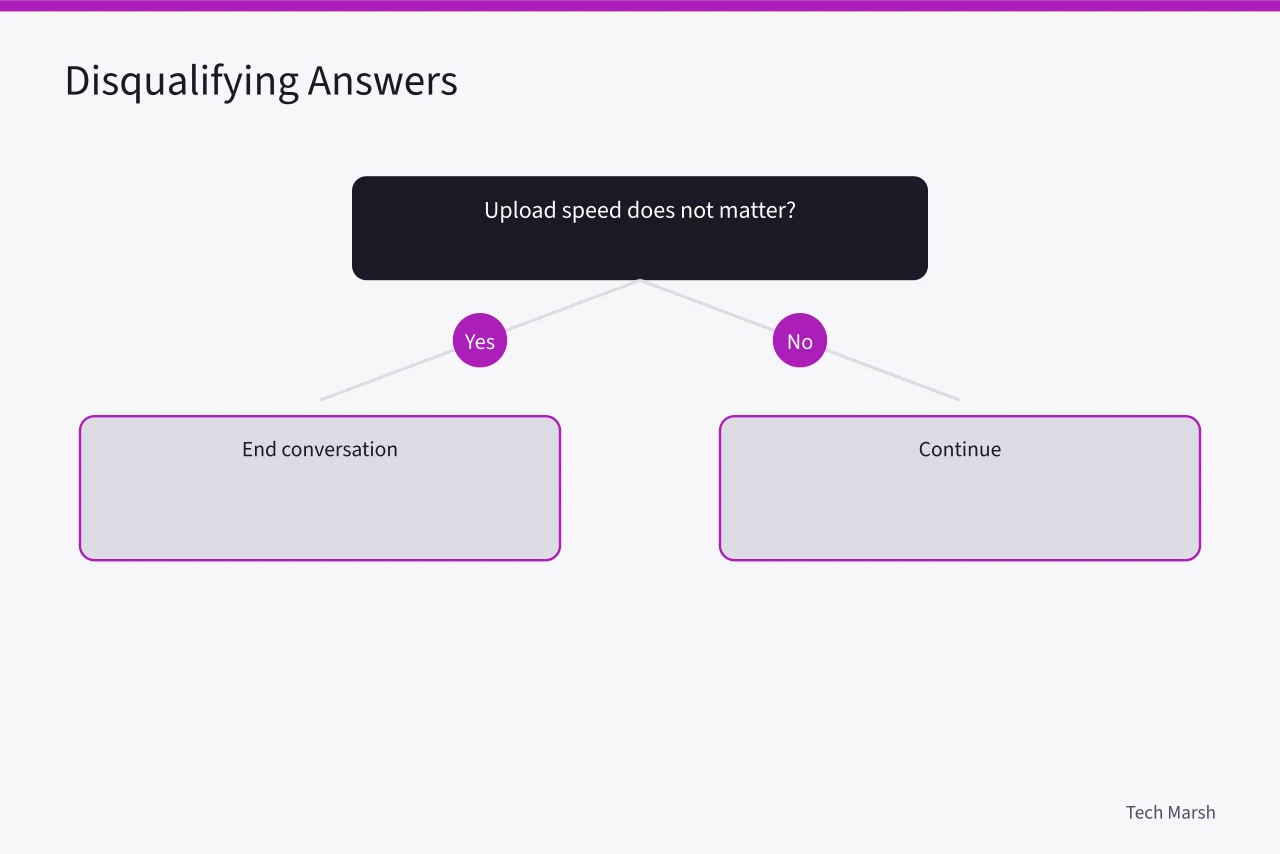
"The upload speed does not matter for most customers." It matters for anyone uploading files, backing up, or hosting a video call. A provider that will not state a number is hiding a weak one.
"We can only give you that price if you add mobile." Bundled pricing is legitimate, but if the standalone rate is not disclosed, you cannot compare it against anyone else.
"The contract is standard, you do not need to read it." Every term length, fee, and increase lives in that document. Refusal to share it before signing is a reason to walk.
A provider that answers all five questions with specific numbers is worth a second call. One that answers with adjectives is not.
What the agreement must state
Before you sign, the contract has to name the technology type and the plan's download and upload speeds. It has to state the monthly price, the equipment rental charge, and the term length separately. It has to give the early cancellation fee as a formula or a table, not a range.
It also has to state whether the price is fixed for the term or subject to increase, and if so, when. Provincial consumer protection rules apply on top of this, so check your province's consumer affairs page for cooling-off rights. Our piece on state privacy laws and cloud backup shows how contract terms and data rules interact after a service ends.
Example: two quotes for one address
A Toronto apartment can often get cable service from the incumbent and from at least one reseller on the same line. Quote A offers 500 megabits down and 30 up for a fixed monthly price with a two-year term. Quote B offers 300 down and 30 up with no term and a higher monthly price.
Quote B is not worse. It costs more per month but carries no cancellation fee, so it wins if you might move within a year. The comparison only works because both quotes stated upload speed and term length. Without those two numbers, the decision is guesswork.
Testing what you actually got
Run a speed test wired, not over Wi-Fi, in the first week. Test at peak evening hours, roughly 7 p.m. to 10 p.m., when neighbourhood traffic is highest. Record three results on different days.
If the delivered download speed sits far below the advertised figure at peak hours, you have grounds to open a ticket. Keep the screenshots. A provider that cannot fix a sustained shortfall may owe you a remedy under its own terms of service. The internet access overview describes how shared network capacity affects delivered speeds.
Common questions
Can a reseller really offer the same line as the big incumbent? Yes, under wholesale access rules the reseller rents capacity on the incumbent's network. The physical line is often identical. Support, billing, and installation scheduling are what differ.
Why is my upload speed so much lower than download? Cable and DSL technologies are asymmetric by design, prioritising download. Only fibre to the home typically offers matching upload and download speeds.
Should I sign a two-year term for a lower price? Only if you are confident you will not move or switch. Calculate the early cancellation fee against the monthly savings before deciding, and get that fee in writing.
Do prices differ by province? Yes. Availability of competing resellers, provincial wholesale terms, and local infrastructure all shift the monthly figure, so compare quotes for your own address rather than a national average.