Guides
How to Buy a Used Phone Without Getting Burned: IMEI, Battery, and iCloud Checks
Buy a used phone safely by checking IMEI, battery health, and iCloud activation lock before you pay. Hidden carrier financing blocks phones months later.
What to take away
- Check the IMEI against US carrier blacklists before you pay, not after.
- Read battery health on the phone itself. Listings overstate it.
- Confirm the previous owner removed iCloud Activation Lock and Android Factory Reset Protection.
- A clean IMEI today can still be blocked later if an installment plan goes unpaid.
The costly one
A used phone that cannot activate on a US carrier is worth less than its parts. The expensive mistake is paying before checking the IMEI. A seller on OfferUp posts an iPhone with a clean screen and a low price. You send $550 through Zelle. The phone works for one weekend, then shows No Service.
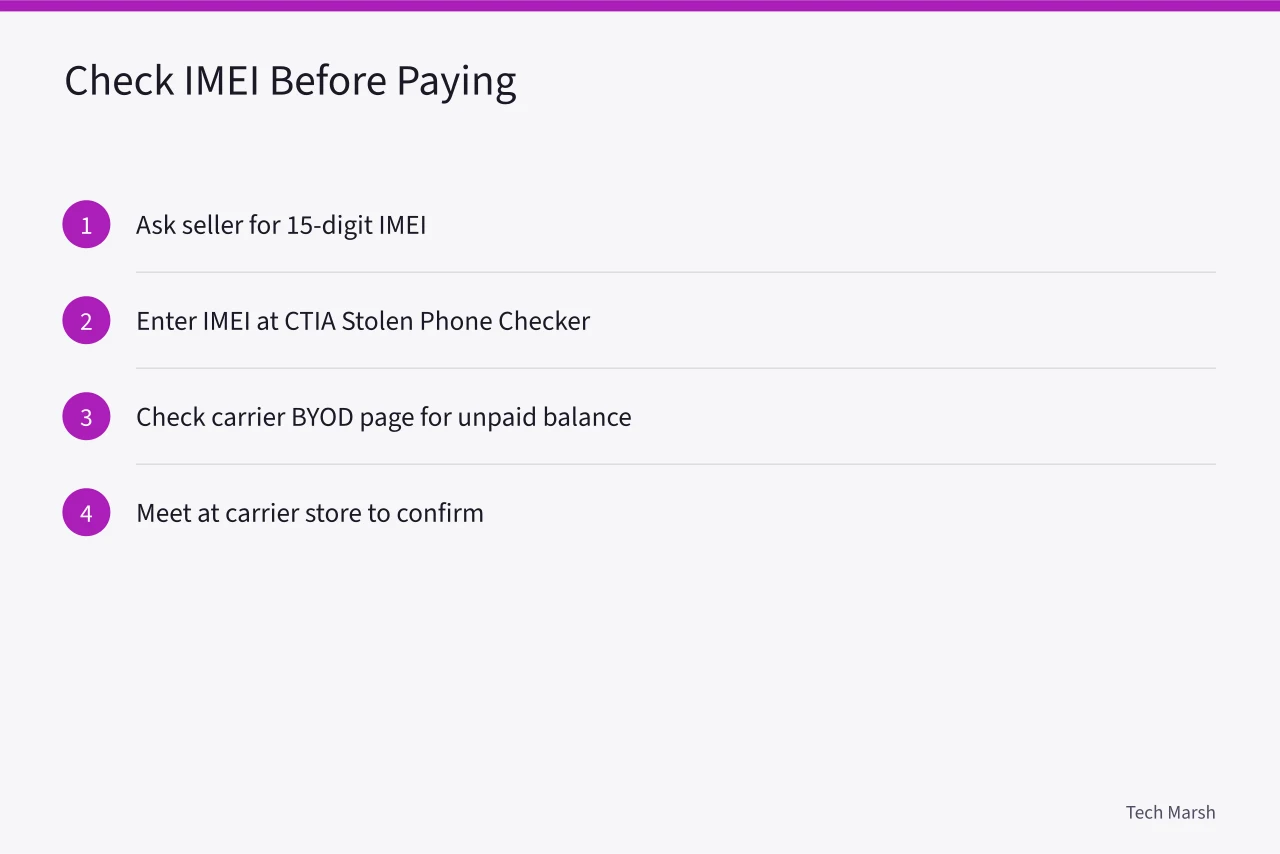
The IMEI had been reported lost or tied to an unpaid AT&T account. You lose the money and the phone cannot be activated. Prevention takes ten minutes. Ask the seller for the 15-digit IMEI before you meet. IMEI number databases explain that carriers share blacklist records.
Then follow these steps:
- Enter the IMEI at the CTIA Stolen Phone Checker.
- Enter the same number on each major US carrier's bring-your-own-device page when the phone is carrier-branded.
- Meet at a carrier store so a rep can confirm there is no unpaid balance.
If the phone will be used with hearing aids, FCC hearing aid compatibility rules add a second check before you commit. One omission here can turn a discount into a full loss.
The ones that look fine at first
Several mistakes pass a quick visual test. The phone powers on, the screen responds, and the price feels fair. Then the problems surface after money changes hands. General used goods checks focus on appearance, but a phone has hidden identifiers.
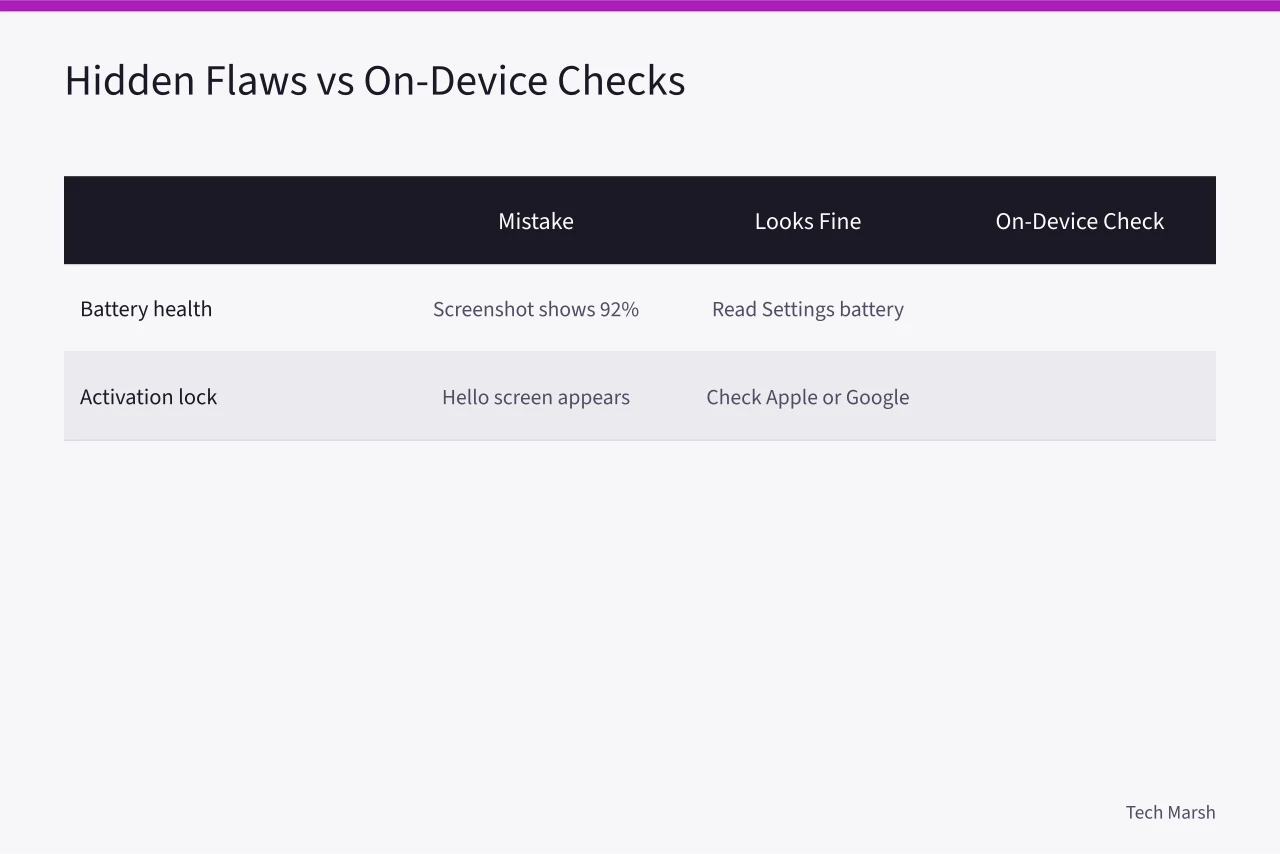
A seller posts a battery health screenshot showing 92 percent. The number is from another phone or from months ago. You buy the device and it shuts down by mid-afternoon. The consequence is a $69 to $89 battery service at a repair shop, plus interrupted days.
Prevention is simple. Open Settings on the phone and read the battery health number while holding it. On Android, check charge cycle count in the built-in diagnostic menu or a reputable battery app. Lithium-ion battery degradation is not linear, so an okay number can hide a weak cell. Replacement access also depends on state law. Right-to-repair laws affect battery replacement cost and availability.
The second mistake is an activation lock that looks absent. Seller says a factory reset was done. You boot the phone and see a hello screen. Later, after entering your Apple ID, the iPhone asks for the previous owner's password. Android phones hit the same wall with Factory Reset Protection.
Consequence: the phone is a brick until the original owner removes the lock. Prevention: before paying, have the seller erase the phone to the hello screen in front of you. On an iPhone, enter the IMEI or serial on Apple's Activation Lock status page. On Android, confirm no Google account remains in Settings.
The third mistake is a carrier restriction that the seller omits. The phone powers on and looks fine. You insert a different carrier SIM and see Invalid SIM. FCC rules require carriers to provide a path for activation after contract terms are met, but the phone may still be restricted today. Prevention: on an iPhone, check Settings > General > About for "No SIM restrictions." On Android, ask the carrier for current status before paying.
The ones that only show up later
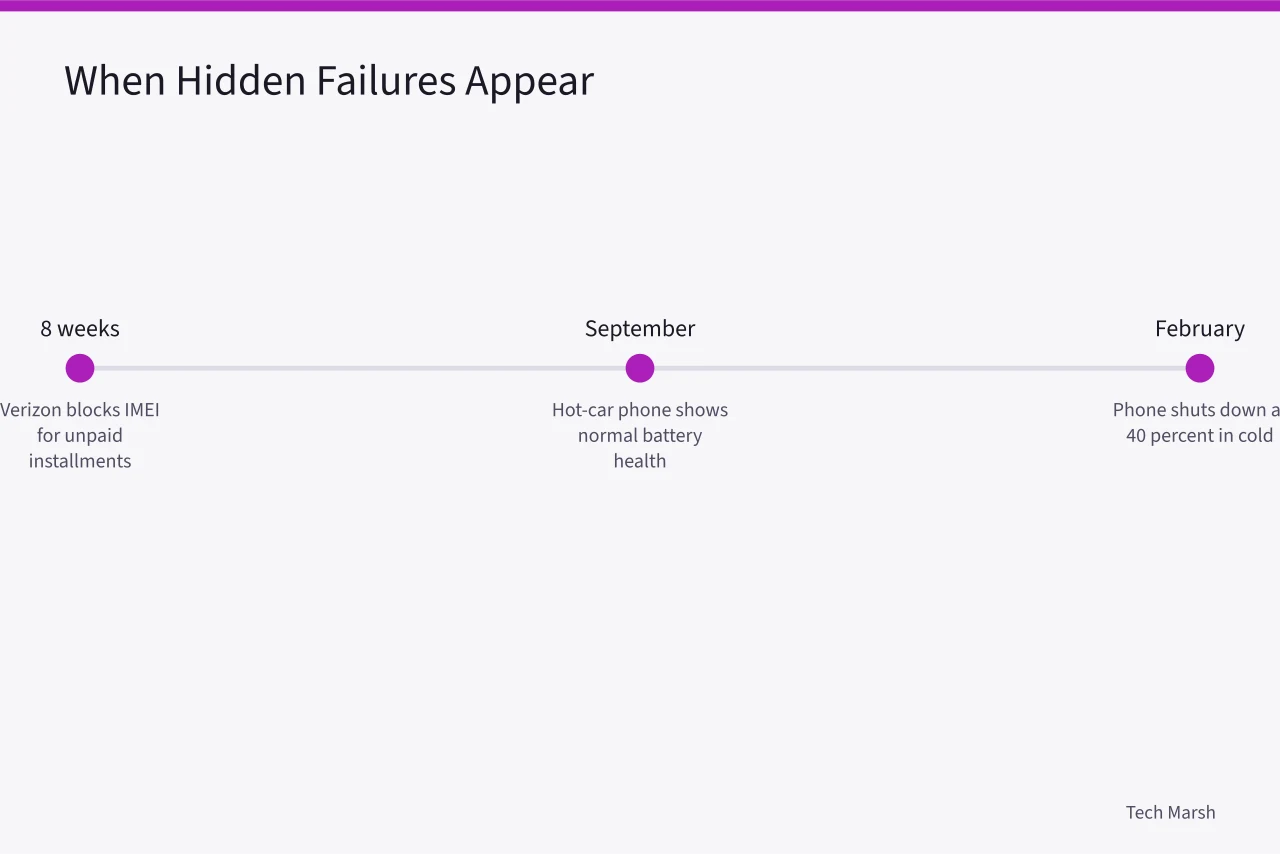
Some failures stay hidden for months. A buyer pays $700 for a used Galaxy on Swappa. The phone activates and works for eight weeks. Then Verizon blocks the IMEI because the original owner stopped making installment payments. The buyer has no refund path through the marketplace. This is the hidden cost of skipping a financing check.
Prevention requires proof of paid-in-full status. Ask for a receipt from the original carrier, or enter the IMEI on the carrier's device check page before buying. Sellers on eBay may list "no financing" but do not rely on that claim.
Battery damage can also hide for months. A phone stored in a hot car in Phoenix may show normal battery health in September. By February, it shuts down at 40 percent in cold weather. Battery safety from Arizona heat explains why high ambient temperatures shorten cell life. Prevention: ask about storage history and test the phone under load for a few minutes while watching the percentage drop.
What they have in common
Each mistake follows the same pattern: the buyer checks the outside of the phone, not the identifiers inside. The table shows the repeated failures.
| Mistake | Looks fine at first | When the failure appears | Prevention |
|---|---|---|---|
| Stolen or blacklisted IMEI | Phone powers on | Within days or weeks | Check CTIA and carrier blacklists before paying |
| Hidden battery weakness | Battery health screenshot looks high | Weeks later after normal use | Read battery health on the device |
| Activation lock left on | Hello screen appears | During setup at home | Check Apple or Google lock status before paying |
| Unpaid carrier financing | Phone works on your SIM | 30 to 90 days later | Ask for paid-in-full receipt from seller |
After the phone is cleared, the next step is moving data from your old handset. USB-C cable types and speeds affect how long that transfer takes.
Common questions
Can a stolen phone be blacklisted after I buy it? Yes. If the original owner reports it stolen later or stops paying an installment plan, the carrier can block the IMEI weeks or months after your purchase. Paid-in-full proof and a CTIA check reduce this risk.
Does a battery health screenshot from the seller count? No. Screenshots can come from another device or an old reading. Read the percentage on the handset itself while it sits in front of you.
What if the seller refuses to share the IMEI? Walk away. A seller with a paid-off phone has no reason to hide the IMEI, and a refusal is a red flag.
Can I use a phone that is still locked to a carrier? Sometimes. It may be usable on that carrier, but you need the carrier to confirm the current activation status and any unpaid balance before you pay.