Rules
How to Recycle Old Electronics Safely: US State Rules and Drop-off Options
How to recycle old electronics safely: US state e-waste laws, EPA-certified recyclers, Best Buy and Staples drop-off, and data wiping steps.
What to take away
- Most US e-waste rules come from state agencies, not a single federal law.
- The EPA names certified electronics recycler standards R2 and e-Stewards.
- Wipe devices before recycling and keep a receipt or data destruction certificate.
- Best Buy and Staples run in-store drop-off programs for many household electronics.
The federal floor and named regulators
The US Environmental Protection Agency sets the federal floor under the Resource Conservation and Recovery Act. It exempts most household electronics from hazardous waste rules unless they contain items like leaded glass or certain batteries. The EPA maintains a list of certified electronics recyclers and encourages donation and recycling through its electronics page. The EPA electronics donation and recycling page names R2 and e-Stewards as recognized certification standards. A recycler holding one of these certifications has been audited for safe handling and data security. The Electronic waste overview describes how certified facilities separate metals and manage hazardous fractions.
Who has jurisdiction
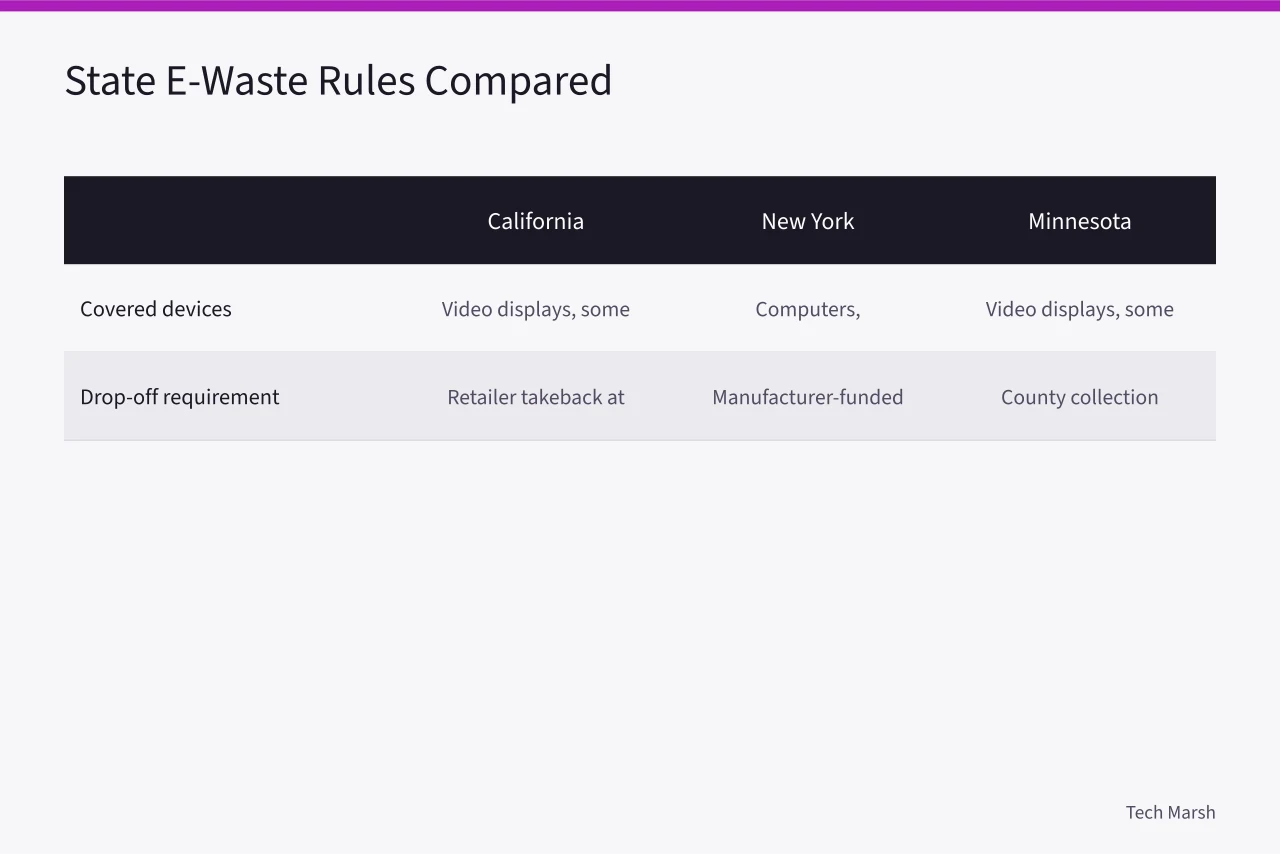
State environmental agencies enforce most e-waste disposal rules. About half of US states have product stewardship laws that require manufacturers to fund collection programs. California, New York, and Minnesota each run programs with different covered devices and drop-off requirements. Local counties and municipalities may add their own household hazardous waste collection events. For batteries, battery safety rules may apply when a swollen or damaged cell is involved. The EPA keeps jurisdiction over interstate hazardous waste shipments and certain cathode ray tube glass.
What a compliant disclosure contains
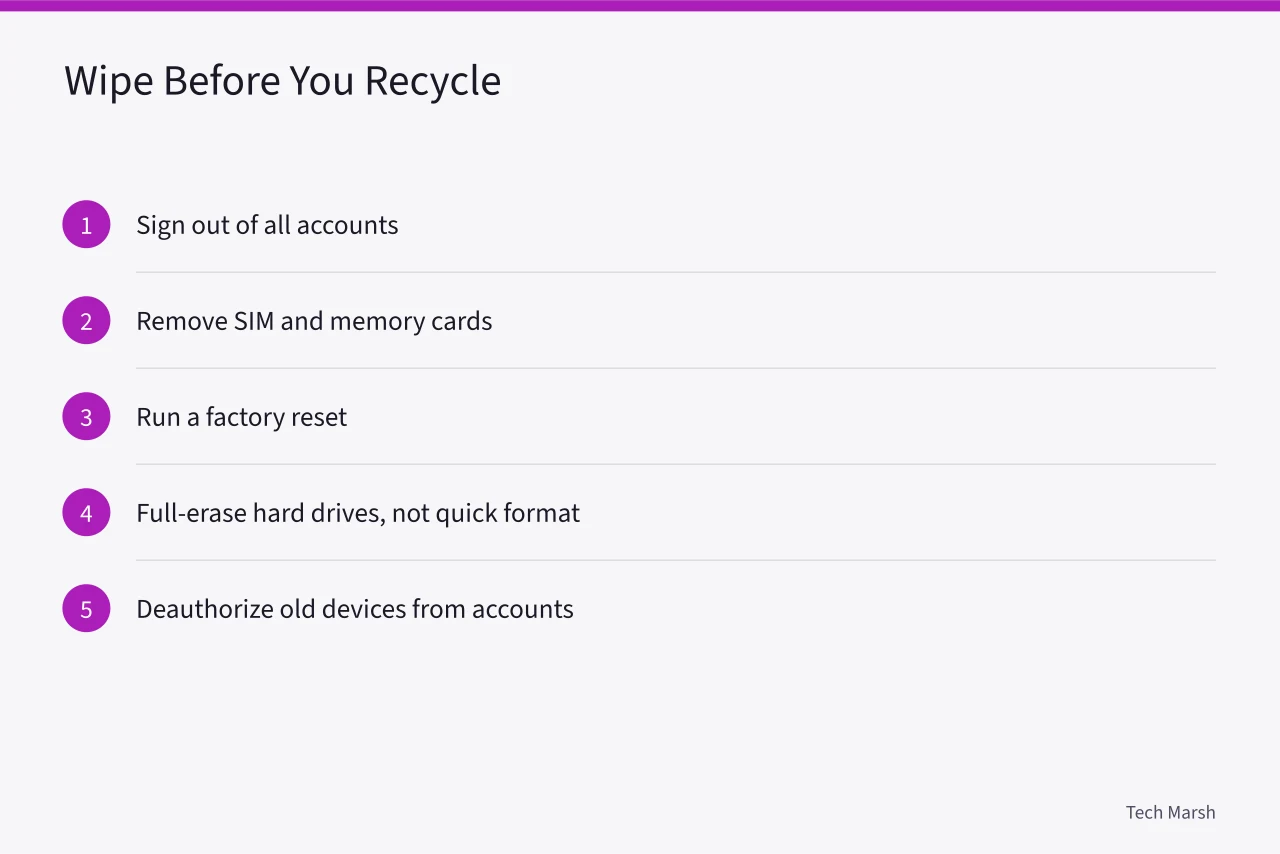
A compliant recycling receipt from a certified electronics recycler should state the recycler's R2 or e-Stewards certification, the date and quantity of items accepted, and a data destruction statement if you request one. Retailer drop-off receipts from Best Buy or Staples usually confirm the item count and date, but they may not include data destruction unless you ask for a certificate. Before you recycle a phone or laptop, sign out of accounts, remove SIM and memory cards, and run a factory reset. For hard drives, use a full erase rather than a quick format. Some state privacy laws still apply to cloud backups after a device fails, so deauthorize old devices from your accounts.
Records to keep
Keep these records for at least three years after recycling:
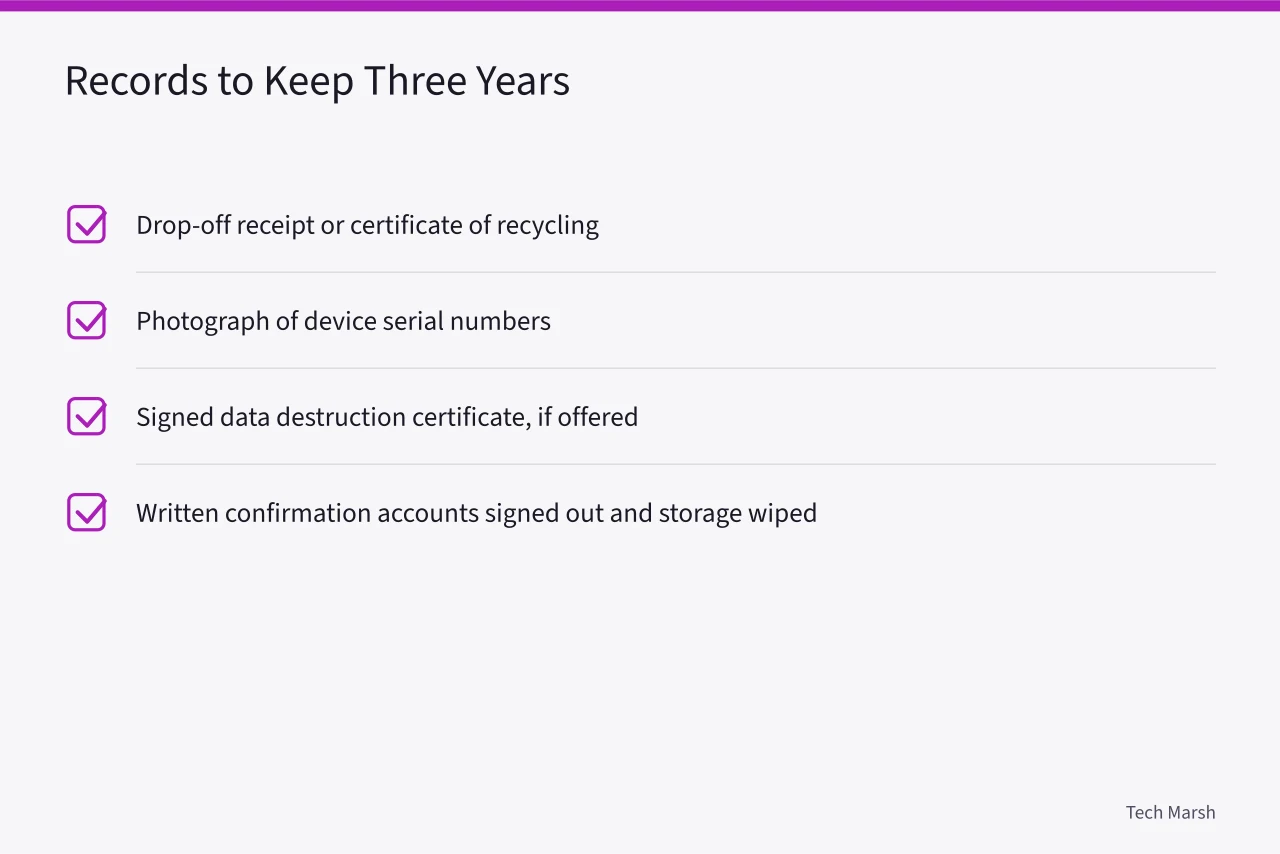
For businesses, the retention period may be longer under cloud storage privacy and state data breach rules. A clear record shows due diligence if a device later turns up in a breach.
What happens if you do not
State environmental agencies can issue citations and fines for illegal disposal of covered electronics. In California, a business that dumps old CRT monitors or televisions can be penalized under hazardous waste control law. Repeated violations can result in higher penalties and cleanup orders. A landlord or property manager who places e-waste in a regular dumpster may be cited by the city or county. These penalties apply even when the device was not the property owner's personal item.
Where the rules differ by state
| State | Covered devices | Drop-off requirement |
|---|---|---|
| California | Video displays, some portable electronics | Retailer takeback at point of sale |
| New York | Computers, peripherals, televisions | Manufacturer-funded collection sites |
| Minnesota | Video displays, some electronics | County collection programs |
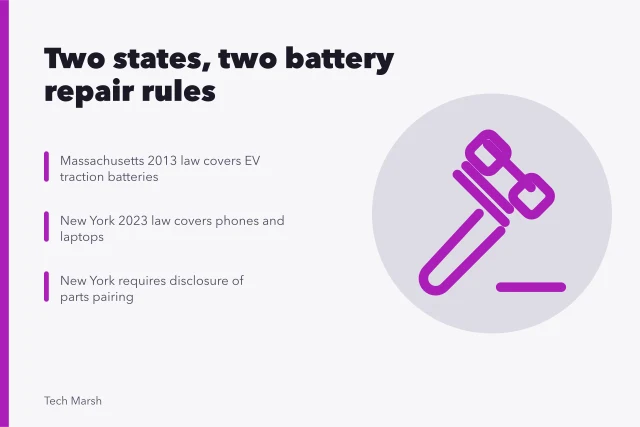
Best Buy accepts up to three household electronics per day per household, including televisions, computers, and phones. Staples runs an in-store program for office electronics, ink, and batteries. The EPA page links to state programs and certified recycler directories. Massachusetts and New York right-to-repair laws affect how a shop can replace a battery, and a recycler must follow those same rules if it removes a battery before shredding.
Common questions
Do I need to wipe my phone before giving it to Best Buy?
Yes. Best Buy does not promise data destruction for all items, so sign out of accounts and factory reset before you go.
Can I recycle a swollen battery at a store drop-off?
Most retailer bins do not accept damaged lithium-ion batteries. Contact a local household hazardous waste facility or a certified recycler.
Do I have to keep a receipt after recycling?
Keep it for at least three years. It shows the device entered a certified stream, which can help if a data breach or illegal dumping claim arises.
Which states have e-waste laws?
Around half of US states, including California, New York, and Minnesota, have product stewardship laws. The EPA page lists state programs.